Water Heater Repair in St. Albans, Queens
Waking up to cold shower water, discovering a weeping storage tank, or struggling with an uncooperative gas pilot disrupts your household routine. We deliver fast, accurate diagnostic evaluations, burner component replacements, and tank maintenance for gas, electric, and boiler-connected indirect water heaters in St. Albans and Addisleigh Park.
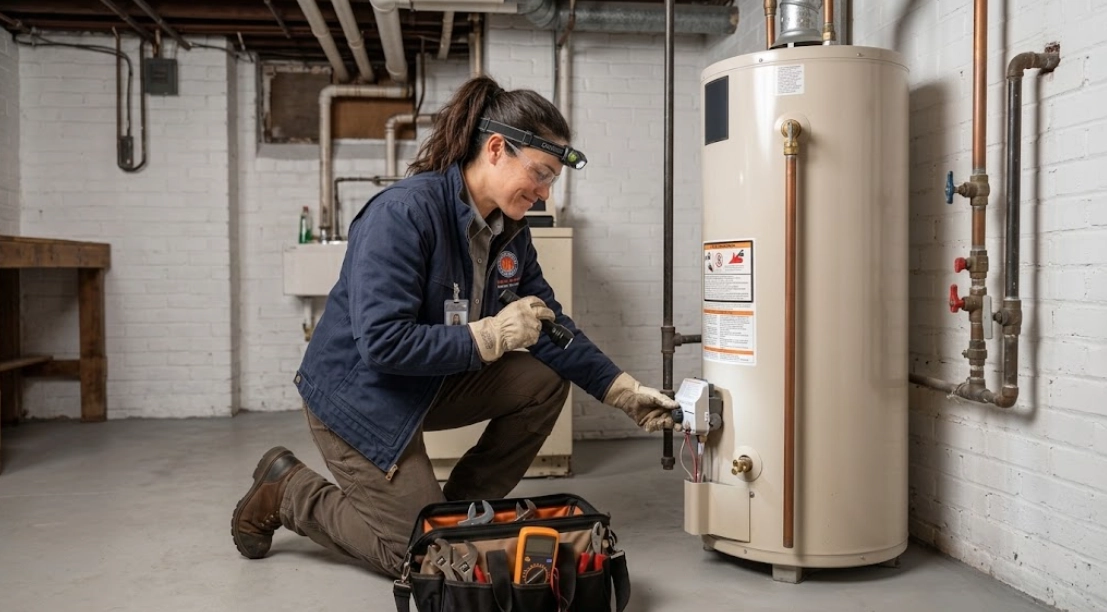
Reliable Domestic Hot Water in Queens Residences
Hot water is indispensable for daily hygiene, cooking, and sanitation. In the detached single-family and multi-generational residences across St. Albans, water heating equipment works continuously around the clock. Over years of heavy demand, municipal minerals accumulate inside storage tanks, electrical heating elements burn out, and thermostatic control valves lose sensitivity.
Homeowners seeking dependable water heater repair St. Albans Queens service need a clear, honest assessment of whether a malfunctioning unit can be economically repaired or requires replacement. Our experienced technicians troubleshoot all common equipment types—including atmospheric gas water heaters, electric storage units, and high-capacity indirect water heaters connected directly to residential heating boilers.
Signs Your Water Heater Requires Professional Service
Identifying warning signs early prevents emergency cellar floods and prolonged hot water outages.
Sudden Lack of Hot Water
When hot water stops completely, prompt no hot water repair St. Albans Queens is needed to inspect gas pilot burners, thermocouples, electronic igniters, or tripped high-limit switches.
Water Pooling Beneath Tank
Addressing a water heater leaking St. Albans Queens immediately is vital to differentiate between a replaceable temperature relief valve and internal tank rust requiring unit replacement.
Popping & Rumbling Sounds
Popping or boiling noises from inside the tank indicate heavy sediment calcification. Trapped water under sediment boils and creates steam bubbles that shake the tank shell.
System Types Common in St. Albans Basements
Tailoring repair methods to your specific water heating configuration.
Natural Gas Water Heaters
Most homes in St. Albans rely on natural gas units. Our gas water heater repair St. Albans Queens covers burner orifice cleaning, thermocouple replacements, draft hood checks, and gas control valve calibration.
Electric Storage Units
In all-electric configurations, electric water heater repair St. Albans Queens addresses burned-out upper or lower heating elements, faulty dual thermostats, and reset button trips caused by voltage spikes.
Indirect Tanks & Boiler Coils
Many local homes with hydronic boilers utilize indirect storage tanks. We service aquastats, circulator zone pumps, mixing valves, and internal coils for dependable hot water heater repair St. Albans Queens.
Repair vs. Replacement: What Homeowners Should Know
Deciding whether to repair or replace an ailing water heater depends on the age of the unit, the location of any leak, and past repair history:
- Age of the Water Heater: Standard atmospheric storage tanks typically last 8 to 12 years. If a unit is under 8 years old and the steel tank is structurally intact, replacing individual parts like thermostats, pilot assemblies, or heating elements is very cost-effective.
- Source of Water Leaks: If water is discharging from the Temperature and Pressure (T&P) relief valve, the valve may simply need replacement or the home may need an expansion tank to absorb thermal expansion. However, water leaking from the tank bottom seam signifies catastrophic metal corrosion that cannot be patched.
- Efficiency Upgrades: If an old unit requires frequent service, upgrading to a high-recovery modern model or an indirect tank paired with your heating system during a boiler replacement can save substantial energy over the long term.
Our Methodical Water Heater Diagnostic Process
Thorough mechanical testing to locate root causes safely.
Safety & Leak Assessment
We check the tank jacket, cold supply fittings, and shutoff valves for leaks, and inspect the immediate area for combustible hazards.
Combustion & Electrical Check
We test millivolt signals on thermocouples, measure electrical resistance across elements, inspect burners, and test draft hood ventilation.
Component Repair or Flush
We replace defective thermostats, thermocouples, or valves, flush bottom sediment if viable, and ensure all pipe connections are sealed.
Temperature Verification
We fire the unit, verify proper water heating recovery, test the T&P valve safety function, and check delivery temperature at household fixtures.
Frequently Asked Questions About Water Heater Repair
Common questions from Queens residents experiencing domestic hot water trouble.
Why did my water heater pilot light go out and fail to stay lit?
The most frequent cause is a defective or soot-coated thermocouple or thermopile. The thermocouple generates a tiny electrical millivolt signal when heated by the pilot flame. If the tip is damaged or oxidized, the gas safety valve cannot detect the flame and automatically shuts off gas flow to prevent dangerous unburned gas accumulation.
Can a leaking water heater tank be repaired, or does it require full replacement?
If water is leaking from a replaceable component—such as the brass temperature and pressure relief valve, pipe nipples, or drain valve—a targeted repair is completely effective. However, if water is weeping from the bottom seam or through the outer insulation jacket, the internal glass-lined steel tank has rusted through and replacement is necessary.
Why does my hot water run out much faster than it used to?
Rapid loss of hot water typically points to two common causes: heavy mineral sediment accumulation in the bottom of the tank insulating water from the gas burner, or a fractured plastic dip tube. A broken dip tube dumps incoming cold water into the top of the tank, diluting hot water before it reaches your fixtures.
What is an indirect water heater and how does it connect to a heating boiler?
An indirect water heater is a well-insulated storage tank containing an internal heat exchanger coil. Rather than using its own gas burner, it uses hot water circulated from the central heating boiler to heat domestic potable water, providing high recovery rates and exceptional fuel efficiency.
Related Heating & Plumbing Services
Comprehensive mechanical solutions for St. Albans homeowners.
Boiler Repair in St. Albans
Cellar heating plant diagnostics, burner ignition repairs, low-water cutoff safety checks, and steam heating controls.
Boiler Replacement
Upgrade old steam or hydronic equipment with high-efficiency heating systems tailored to your home’s radiation capacity.
Radiator Repair & Balancing
Fix cold radiators, stop noisy steam pipe banging, and replace leaking radiator valves in pre-war and colonial homes.
Explore our neighborhood service coverage on our Service Areas page.