Sewer Line Repair in St. Albans, Queens
Recurring basement drain backups, stubborn main line clogs, and foul sewer gas odors point to structural issues in your underground sewer lateral. We provide high-definition video camera inspections, targeted root clearing, and compliant repairs for private building sewer lines across St. Albans and Addisleigh Park.
Protecting Your Home from Underground Sewer Lateral Failures
In established Queens neighborhoods like St. Albans, underground sewer lines date back to the initial residential development of the 1920s to 1940s. These lines were commonly laid using vitrified clay pipe or extra-heavy cast iron. Over decades, the combined pressures of soil settlement, nearby tree growth, and internal pipe erosion can cause sections of the sewer lateral to shift, crack, or become choked with invasive roots.
When you need professional sewer line repair St. Albans Queens property owners must recognize that New York City places the legal responsibility for the entire house sewer connection—from the cellar wall all the way to the municipal sewer main in the street—on the private homeowner. Addressing a failing main line requires thorough diagnosis before embarking on disruptive excavations.
Signs of a Failing Main Sewer Lateral
Recognizing severe underground drainage defects before wastewater floods your cellar.
Basement Floor Drain Backups
When raw wastewater surges into low-lying cellar drains, laundry sinks, or basement toilets, an emergency sewer backup repair St. Albans Queens is needed to clear the downstream blockage immediately.
Multiple Gurgling Fixtures
If flushing a first-floor toilet causes water to gurgle and bubble in a nearby tub or kitchen sink, air is displaced by standing wastewater backed up inside the primary building drain.
Persistent Sewer Odors
Strong, sickening sulfur and sewer gas odors in cellar spaces or near front yard walkways signify cracked underground pipes or a dried-out house trap letting sewer air enter the living space.
Accurate Diagnosis with Video Camera Technology
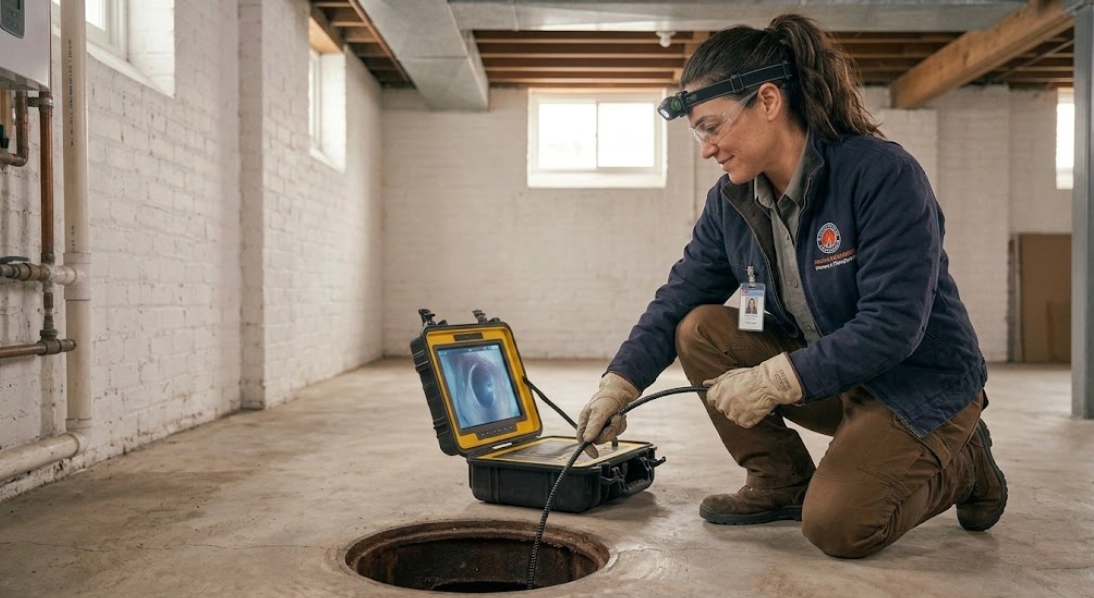
Guesswork has no place in underground plumbing. By conducting a detailed sewer camera inspection St. Albans Queens technicians can view the interior condition of your sewer lateral in real time. We feed an optical fiber-camera with self-leveling optics directly through the main house trap cleanout.
This non-destructive diagnostic process reveals the precise location, depth, and nature of the defect—whether it is an aggressive tree root invasion, an isolated joint fracture, a sagged pipe section (belly), or a collapsed clay tile. Knowing exactly where the problem lies prevents unnecessary, costly excavation across landscaped lawns or driveways.
Root Causes of Sewer Failures in St. Albans
Key factors that compromise underground sewer lines in older Queens communities.
Aggressive Tree Root Intrusion
St. Albans features mature street trees whose extensive roots search for water vapor. Microscopic cracks in mortar joints allow hair-like roots to enter clay pipes, where they flourish on nutrient-rich wastewater into thick, impenetrable root plugs. While routine drain cleaning offers temporary relief, damaged joints eventually require structural repair.
Ground Shifting & Pipe Bellies
Decades of soil compaction and high seasonal water tables in Southeast Queens can cause sections of pipe to settle unevenly. This creates a low spot, or "belly," where water pools and solid waste continuously collects instead of draining smoothly by gravity.
Cast-Iron Bottom Channeling
In cast-iron building drains, decades of acidic wastewater gradually erode the bottom invert of the pipe. Over 50 to 80 years, the bottom wears paper-thin and cracks open, allowing wastewater to leach into the soil and undermine the foundation slab.
Stormwater Inundation & Sump Pump Loads
Heavy rainfall events overload combined drainage systems. Coordinating sewer repairs with backwater protection and a dedicated sump pump service prevents storm runoff from backing up through basement floor drains.
Our Methodical Sewer Repair Process
From initial optical scoping to permanent code-compliant restoration.
Cleanout Scoping
We access the main house trap and run high-resolution video equipment through the line out toward the street main.
Electronic Sonde Locating
We locate the exact underground depth and surface position of the pipe fracture, minimizing the excavation footprint.
Targeted Repair or Replace
Depending on structural integrity, we perform a localized spot excavation or full lateral pipe replacement complying with NYC DEP standards.
Flow & Pressure Testing
We test the completed line with high-volume water flushes, confirm proper pitch, seal cleanouts, and verify smooth flow to the city main.
Urgent Health Notice: Sewage Biohazard Safety
Important Safety Precautions During a Backup
Raw municipal sewage contains harmful pathogens, bacteria, viruses, and toxic gases such as hydrogen sulfide. If wastewater backs up into your basement:
- Cease all water usage immediately: Stop running faucets, dishwashers, and washing machines, and do not flush toilets anywhere in the home.
- Avoid direct contact: Never wade through standing wastewater without protective rubber boots and gloves. Keep children and pets away from contaminated areas.
- Watch for electrical hazards: If standing water approaches electrical outlets, baseboard heaters, or the cellar boiler, do not enter the cellar until power is safely shut off at the main breaker.
- Call professional dispatch: Phone our office at (315) 202-8009 for prompt diagnostic scheduling.
Frequently Asked Questions About Sewer Line Repair
Clear guidance regarding private sewer laterals and NYC municipal requirements.
Who is responsible for the underground sewer line in New York City?
Under New York City regulations (DEP and DOB rules), property owners are responsible for maintaining and repairing the entire private house sewer lateral from the building foundation all the way to its connection point at the municipal sewer main in the street, including the section beneath the sidewalk and roadway.
How does a video camera inspection pinpoint underground sewer line problems?
A waterproof, high-resolution color camera mounted on a flexible push rod is inserted through the main house trap cleanout. As it travels down the pipe, it transmits real-time video revealing tree root intrusions, cracked clay tiles, joint separations, or sagging pipe bellies, while an integrated sonde transmitter pinpoints the exact underground depth and location from above.
Why are tree roots so destructive to sewer lines in St. Albans residential properties?
Many residential streets in St. Albans and Addisleigh Park are lined with mature shade trees whose root systems constantly seek moisture. Vintage sewer lines constructed from vitrified clay pipes have joint seams sealed with mortar that deteriorates over time. Hairline root fibers penetrate these joints, expanding into dense root balls that catch waste paper and cause chronic backups.
What are the warning signs of a failing underground sewer main lateral?
Primary warning signs include multiple cellar or ground-floor fixtures backing up simultaneously, gurgling sounds coming from toilet bowls when washing machines drain, persistent sewer gas odors in the basement, or unexplained sunken depressions in front lawn turf or driveway pavement.
Related Plumbing & Heating Services
Comprehensive diagnostic and drainage solutions across Southeast Queens.
Drain Cleaning
Mechanical snaking and clearing for sluggish secondary branch waste lines, kitchen sinks, bathtubs, and fixture traps.
Sump Pump & Flood Protection
Cellar water mitigation, battery backup pumps, and backwater valve installations to protect against municipal sewer surcharges.
Boiler Repair in St. Albans
Heating diagnostics, steam boiler maintenance, and safety controls to keep your residential heating system firing safely.
View complete neighborhood coverage details on our Service Areas page.