Steam Heat & Radiator Repair in St. Albans, Queens
Cold cast-iron radiators, leaking valve stems, hissing air vents, and deafening pipe banging disrupt comfort and waste fuel in classic Queens residences. We restore quiet, balanced steam heating across St. Albans and Addisleigh Park through precision radiator valve replacements, air vent recalibrations, and pitch adjustments.
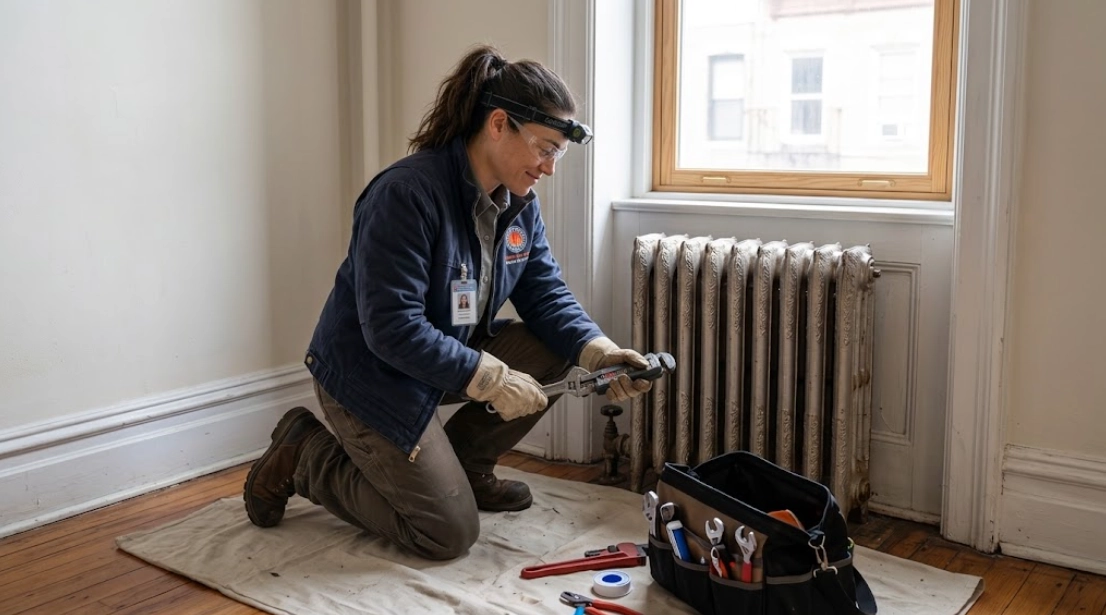
Restoring Quiet, Even Steam Heat in St. Albans Homes
Single-family and detached homes built throughout St. Albans during the pre-war and mid-century eras predominantly utilize gravity one-pipe steam heating. These systems rely on simple, elegant physics: steam rises from the cellar boiler, pushes cooler room air out of cast-iron radiator vents, condenses into water as it radiates warmth, and trickles back down the very same pipe to the boiler.
However, when components fail, this delicate equilibrium is broken. Homeowners searching for dependable radiator repair St. Albans Queens often face rooms that refuse to warm up, noisy hissing from spit vents, or alarming nocturnal banging. Resolving these issues requires an expert understanding of steam pressure, pipe slope, and component compatibility.
Common Steam Radiator Symptoms & Defects
Understanding what your radiator is doing reveals the underlying distribution flaw.
Completely Cold Radiator
When a radiator stays stone cold while others are hot, trapped air inside the unit cannot escape because the air vent is stuck shut or the shutoff valve is partially obstructed.
Leaking Valve Stem
Water dripping or spitting from the base of the radiator indicates worn valve packing. We deliver durable steam radiator valve replacement St. Albans Queens to protect finished hardwood floors from severe water stains.
Violent Banging & Clanking
Alarming banging steam pipes St. Albans Queens occur when steam collides with trapped condensate water inside an unpitched radiator or sagging pipe run, creating explosive hydraulic shock waves.
Why Radiators Malfunction in Older Queens Residences
Key mechanical causes that compromise steam circulation in residential heating networks.
Failed Air Vents & Sizing Mismatches
Every radiator requires a functioning air vent that stays open to vent air, then snaps shut when hot steam reaches its internal thermostatic element. Mineral deposits from hard water cause vents to stick open (spitting water and hissing steam) or stick closed (leaving radiators cold). Furthermore, vents must be sized to balance heating speeds between first-floor and second-floor rooms.
Incorrect Radiator Pitch & Floor Settling
In a one-pipe steam system, the radiator must have a slight, continuous downward pitch toward the supply valve so condensed water can drain back to the riser. Over decades, wooden floor joists settle, causing the radiator to tilt flat or backward. Condensate pools at the far end, starving the radiator of steam and creating loud water hammer.
Partially Closed Radiator Supply Valves
A one-pipe steam valve cannot be used to throttle heat like a water faucet. It must be either 100% fully open or 100% fully closed. Leaving a valve half-open restricts the narrow orifice, trapping condensed water inside the radiator body and triggering immediate pipe banging.
Excessive Boiler Operating Pressure
When a cellar boiler's Pressuretrol is set too high (above 2 PSI), the excessive steam pressure actually forces radiator air vents closed prematurely, preventing proper air venting and resulting in cold radiators despite a roaring boiler fire.
Our Methodical Radiator Repair & Balancing Process
Safe, professional solutions that restore quiet warmth without property damage.
System Cold Inspection
We check valve stems, examine packing nuts, verify pipe slope with a spirit level, and test main cellar steam vent function.
Safe Component Service
When the system is cold and depressurized, we repack or replace leaking supply valves, renew spud unions, and adjust radiator shims.
Thermostatic Vent Balancing
We install properly calibrated Hoffman or Maid-O'-Mist air vents, matching venting speeds to room distance from the cellar boiler.
Live Firing & Acoustic Test
We fire the boiler, observe steam arrival across all radiators, verify silent air venting, and confirm complete water drainage back to the cellar.
Critical Safety Guidance for Steam Heating Systems
Warning: Never Loosen Fittings Under Pressure
Steam systems operate with boiling water and pressurized vapor reaching temperatures over 212°F (100°C). Never attempt to unscrew an air vent, loosen a packing nut, or force a stuck radiator valve while the boiler is running or hot.
- Loosening pressurized fittings can eject boiling condensate and steam, causing severe scalding burns.
- Forcing a seized brass valve stem with excessive wrench torque can snap the cast-iron spud inside the radiator, causing sudden room flooding.
- Always wait until the boiler is shut off and radiators have cooled completely before having a professional perform repairs.
Frequently Asked Questions About Radiator Repair
Expert answers regarding steam heat distribution and radiator performance in Queens.
Why is my steam radiator cold while other radiators in the house are scorching hot?
The most common culprit is a failed or clogged radiator air vent. In a one-pipe steam system, steam cannot enter the radiator until cold air is expelled through the vent. If the vent's internal float or thermal element is stuck shut with mineral scale, air remains trapped inside, completely blocking incoming steam. A partially closed shutoff valve can also prevent steam entry.
What causes loud banging, clanking, or hammering sounds in steam pipes?
Loud banging (water hammer) occurs when high-velocity steam collides with trapped, pooling condensate water in the piping. In one-pipe steam heating, steam and condensed water travel in opposite directions through the same pipe. If the radiator or branch pipe has lost its downward pitch toward the supply riser, condensate collects into a pool that steam violently accelerates against pipe elbows.
Why is it dangerous to force a stuck radiator valve or remove an air vent while hot?
Attempting to force an old, corroded cast-iron or brass radiator valve can snap the stem or fracture the spud, releasing scalding 212°F steam and boiling water directly into the room. Similarly, removing a vent while the boiler is under pressure can result in severe burn injuries and rapid room flooding.
Can a leaking radiator valve damage hardwood flooring and ceilings below?
Yes. Packing nuts around radiator valve stems loosen over time as packing material dries out. Steam vapor and condensate seep down the pipe nipple, penetrating floorboards and ruining plaster or drywall ceilings in rooms directly below.
Related Heating & Plumbing Services
Complete mechanical expertise for your residential property.
Boiler Repair in St. Albans
Diagnosing burner ignition lockouts, low-water cutoff safety controls, and pressuretrol calibration in residential cellar boiler rooms.
Boiler Replacement
Upgrading obsolete steam boilers with correctly sized equipment matched to your home's total cast-iron radiator radiation load.
Water Heater Repair
Restoring domestic hot water reliability with burner maintenance, pilot checks, and indirect storage tank repairs.
Learn more about our local coverage across St. Albans on our Service Areas page.